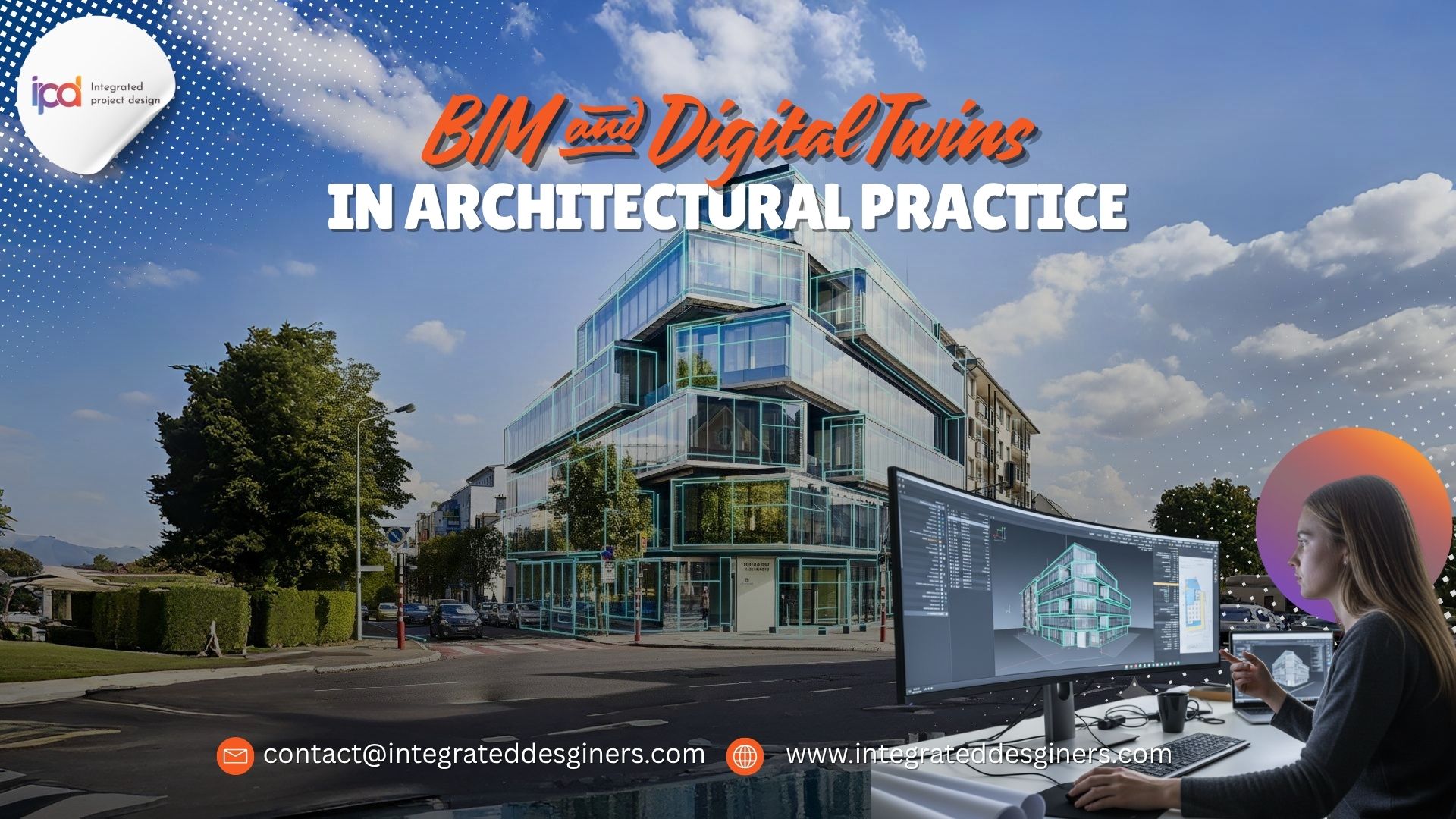
BIM and Digital Twins in Architectural Practice in Seattle, WA are no longer buzzwords—they are reshaping how architects and owners manage the full building lifecycle. Traditionally, Building Information Modeling (BIM) has been the backbone of digital design, offering data-rich models that improve collaboration, reduce errors, and streamline construction workflows. But what happens after the project is handed over?
This is where digital twins extend BIM. A digital twin is a dynamic, real-time digital replica of a physical asset that evolves as the building operates. By integrating BIM with IoT sensors, cloud platforms, and data analytics, architects and facility managers can monitor performance, manage retrofits, and support adaptive reuse strategies seamlessly.
Seattle, WA—a hub for sustainable architecture and tech-driven innovation—is leading this transformation. With growing demand for retrofitting aging structures, enhancing energy efficiency, and ensuring smart building operations, the integration of BIM and digital twins has never been more relevant.
What Are Digital Twins and How Do They Extend BIM?
Digital twins are data-driven, real-time representations of physical assets. Unlike static BIM models, digital twins connect live data streams—such as energy use, occupancy, and environmental conditions—with BIM’s structured design data.
-
BIM models: Focus on geometry, design intent, and construction documentation.
-
Digital twins: Expand BIM into operation and maintenance, linking live building data with design intent for predictive and adaptive decision-making.
For architects in Seattle, WA, this integration ensures that the original design vision continues to guide the building’s evolution during operations and retrofits.
Key Applications in Architectural Practice
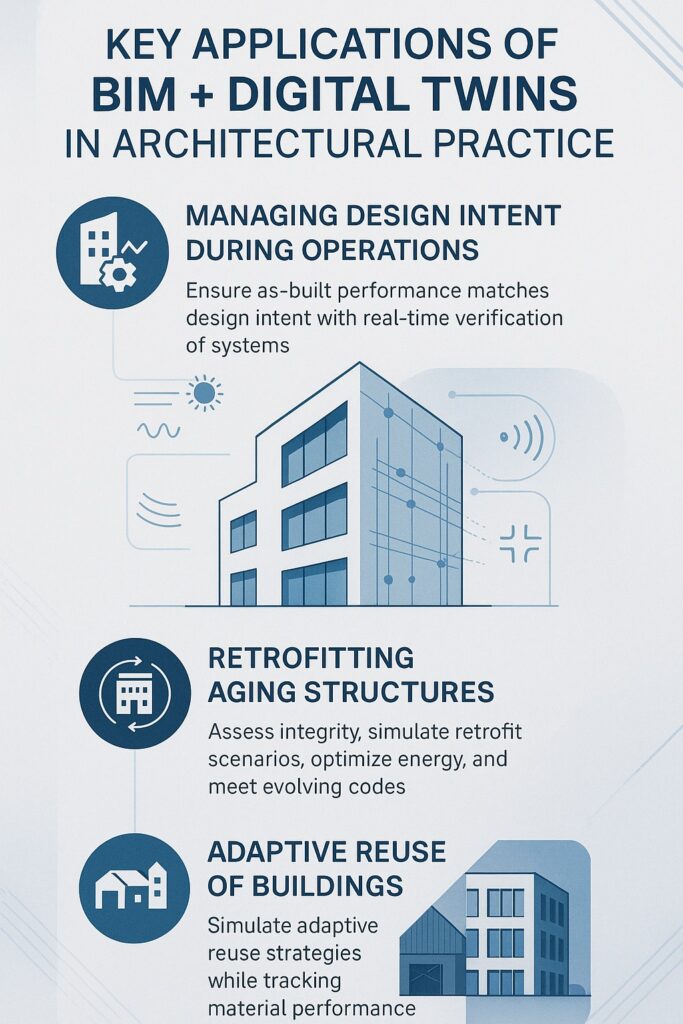
1. Managing Design Intent During Operations
One of the biggest challenges architects face is ensuring that the as-built performance matches the design intent. With digital twins, discrepancies between design and reality can be identified early. Architects can verify whether HVAC systems, daylighting strategies, or acoustic designs are performing as modeled.
2. Retrofitting Aging Structures
Seattle’s urban fabric includes older buildings requiring modernization. BIM combined with digital twins allows architects to:
-
Assess structural integrity with sensor data.
-
Simulate retrofit scenarios.
-
Optimize energy efficiency strategies.
-
Ensure compliance with evolving sustainability codes.
3. Adaptive Reuse of Buildings
Adaptive reuse is gaining momentum as cities aim for sustainability. With BIM and digital twins, architects can virtually simulate how existing spaces can be reprogrammed—transforming warehouses into offices, schools into housing, or factories into cultural centers—while keeping track of material performance and energy flows.
Tools and Technologies Powering BIM + Digital Twins
The synergy between BIM and digital twins depends on computational platforms and integration tools.
-
Autodesk Revit + Autodesk Tandem: Extend Revit BIM models into operational digital twins.
-
Bentley iTwin: Connects BIM, GIS, and IoT for infrastructure-scale twins.
-
Azure Digital Twins & IoT Hub: Microsoft’s Seattle-based ecosystem connects sensor networks to BIM platforms.
-
Siemens NX and Building Twin: Focuses on industrial and mixed-use facilities.
Global Relevance Across USA, UK, UAE, and India
-
USA: Cities like Seattle, WA are focusing on sustainable retrofits and net-zero buildings.
-
UK: Government mandates emphasize whole-lifecycle BIM adoption, paving the way for digital twin integration.
-
UAE: Smart city projects in Dubai and Abu Dhabi are pushing boundaries with digital twin adoption for mega developments.
-
India: Rapid urbanization is fueling adoption for smart campuses, metro projects, and retrofitting initiatives.
Benefits of BIM and Digital Twins in Seattle, WA
-
Lifecycle Management – Continuous alignment between design, construction, and operation.
-
Energy Optimization – Real-time monitoring to cut waste and support Seattle’s carbon neutrality goals.
-
Predictive Maintenance – Anticipate system failures before they occur.
-
Sustainability and Compliance – Ensure green building standards (LEED, WELL) are met.
-
Cost Efficiency – Reduced lifecycle costs by informed decision-making.
-
Data-Driven Retrofitting – Smarter planning of upgrades for aging infrastructure.
Challenges and Considerations
While promising, the integration of BIM and digital twins faces challenges:
-
Data Interoperability: BIM and IoT systems must “speak the same language.”
-
High Implementation Cost: Smaller firms may struggle to invest.
-
Skill Gaps: Architects must gain data science literacy.
-
Data Privacy: Live operational data raises cybersecurity concerns.
Case Studies and Examples
Seattle Central Library
Using BIM and IoT data integration, the library optimized HVAC and lighting for energy savings. A future-ready digital twin platform is being considered to monitor adaptive reuse options.
Amazon HQ
Seattle’s tech giant uses a digital twin of its campus to track occupancy patterns, energy flows, and predictive maintenance schedules, enhancing user experience while lowering operational costs.
Future Outlook in Seattle, WA
As Seattle leads the way in sustainable design, architects are increasingly expected to deliver projects that go beyond construction. By embracing BIM and digital twins, they can offer clients a living model that evolves with the building, ensuring long-term value, sustainability, and resilience.
FAQs
Q1: What is the difference between BIM and digital twins?
BIM provides a detailed 3D model for design and construction, while digital twins extend that model into operations, integrating real-time data for lifecycle management.
Q2: How are digital twins used in retrofitting projects?
Digital twins allow architects to simulate retrofit scenarios, test sustainability improvements, and optimize resource allocation before physical intervention.
Q3: Why is Seattle, WA important in BIM and digital twin adoption?
Seattle’s focus on sustainability, tech-driven solutions, and retrofitting older buildings makes it a leader in integrating BIM and digital twin technologies.
Q4: What tools are commonly used for BIM and digital twins?
Autodesk Tandem, Bentley iTwin, Microsoft Azure Digital Twins, and Siemens Building Twin are leading solutions.
Q5: How do digital twins help adaptive reuse?
Digital twins allow virtual testing of new space uses while monitoring building performance, making adaptive reuse more efficient and data-driven.
Conclusion:
BIM and Digital Twins in Architectural Practice in Seattle, WA enable architects to extend BIM models into living, data-rich systems that support design intent during operation, retrofitting, and adaptive reuse. By merging real-time data with BIM’s structured design, architects deliver smarter, sustainable, and future-ready buildings that evolve with user needs and environmental demands.