Scan to BIM – Driving Accuracy and Digital Transformation in Construction New York
Introduction
In the fast-paced world of construction, Scan to BIM solutions in New York are redefining how projects are documented, designed, and managed. By merging laser scanning with intelligent BIM modeling, teams unlock unmatched accuracy and efficiency while laying the groundwork for digital twins. This shift is reshaping construction and facility management globally, as precise as-built data is transformed into intelligent 3D models that reduce risks, speed up workflows, and support smarter asset management. From the USA to the UK, UAE, and India, Scan to BIM has become indispensable for contractors, architects, and facility managers—delivering its greatest impact on complex urban projects across New York.
What is Scan to BIM and Why It Matters?
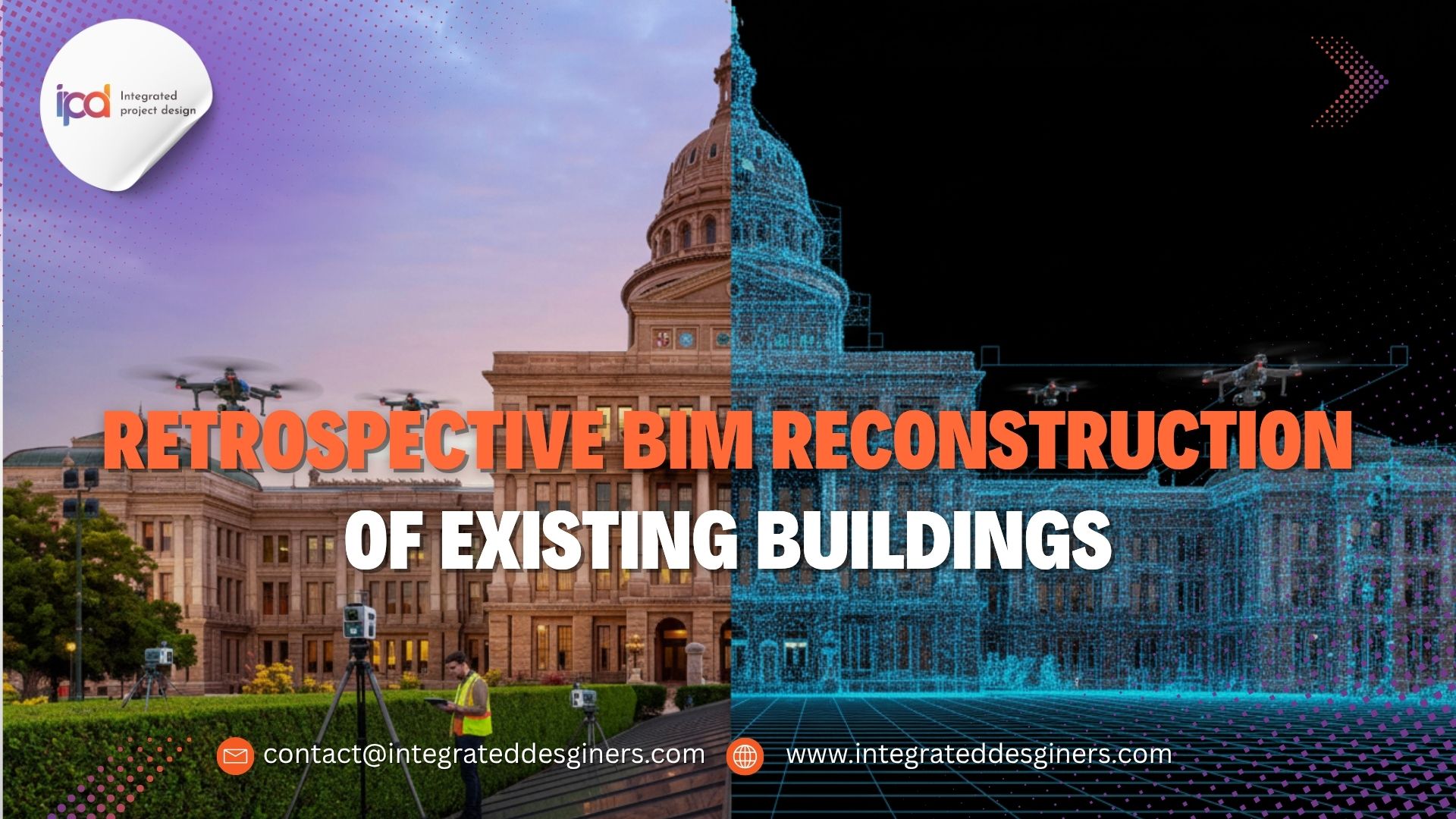
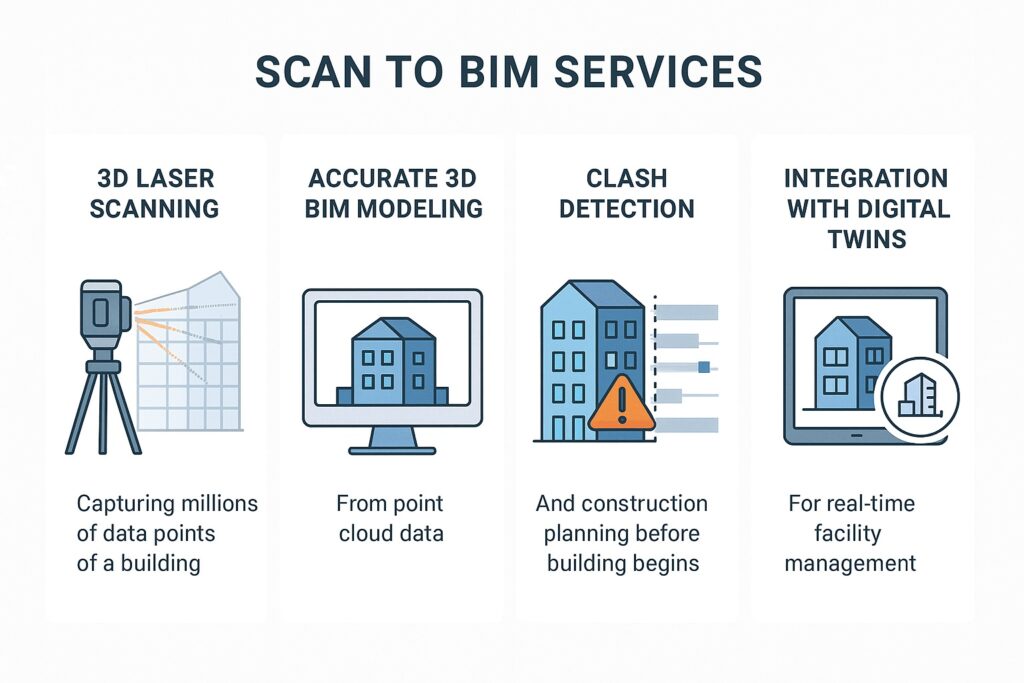
Scan to BIM starts with 3D laser scanners that capture millions of data points—known as point clouds—of a physical building or site. This data is then processed into a highly accurate 3D BIM model.
Unlike traditional documentation, Scan to BIM offers:
-
Unmatched accuracy (millimeter precision)
-
Time efficiency compared to manual surveys
-
Clash detection before construction begins
-
Integration with digital twins for long-term facility use
In markets like the USA, UK, UAE, and India, construction stakeholders are already realizing the benefits of deploying Scan to BIM on hospitals, airports, heritage restorations, and high-rise residential towers. The same approach is shaping smarter outcomes in New York.
Scan to BIM as the Foundation for Digital Twins
A digital twin is a living, evolving model of a physical asset, enriched with IoT sensor data for real-time monitoring and predictive analytics. But without accurate baseline data, digital twins fail to deliver value.
That’s where Scan to BIM steps in:
-
Accurate as-built modeling → Ensures a reliable starting point
-
Integration with IoT sensors → Enables predictive maintenance
-
Operational insights → Improves energy performance, safety, and asset longevity
In the UK, digital twins are driving smart city initiatives. In the UAE, government-led BIM mandates highlight the importance of accurate baselines. India is rapidly adopting digital twin concepts for urban infrastructure. And in the USA, the demand for reliable as-builts is evident in complex metro projects and high-density areas like New York.
Use Cases of Scan to BIM Across Markets
Healthcare Facilities
Hospitals demand precision in MEP coordination and space planning. Scan to BIM ensures accurate layouts for HVAC, electrical, and medical gas systems, making retrofits smoother in the USA and beyond.
Heritage Restorations
In the UK, Scan to BIM plays a vital role in restoring heritage buildings by capturing intricate details without invasive surveys.
Airports and Infrastructure
In the UAE, mega-airports and transit hubs leverage Scan to BIM for maintenance planning and expansion projects.
Urban Developments
India’s rapid urban growth makes Scan to BIM indispensable for smart cities, high-rise apartments, and infrastructure corridors. Similarly, the complexities of vertical builds make the approach essential in New York.
The Business Value of Scan to BIM
Accuracy That Pays Off
Errors in documentation often cause rework and disputes. With Scan to BIM, accuracy reduces change orders and accelerates approvals.
Cost Efficiency
Scan to BIM cuts survey time, reduces waste, and ensures resources are deployed effectively. In high-cost regions like the USA and UAE, the savings are significant.
Improved Collaboration
By delivering a single source of truth, Scan to BIM enhances collaboration among architects, engineers, contractors, and owners across markets including India, UK, and New York.
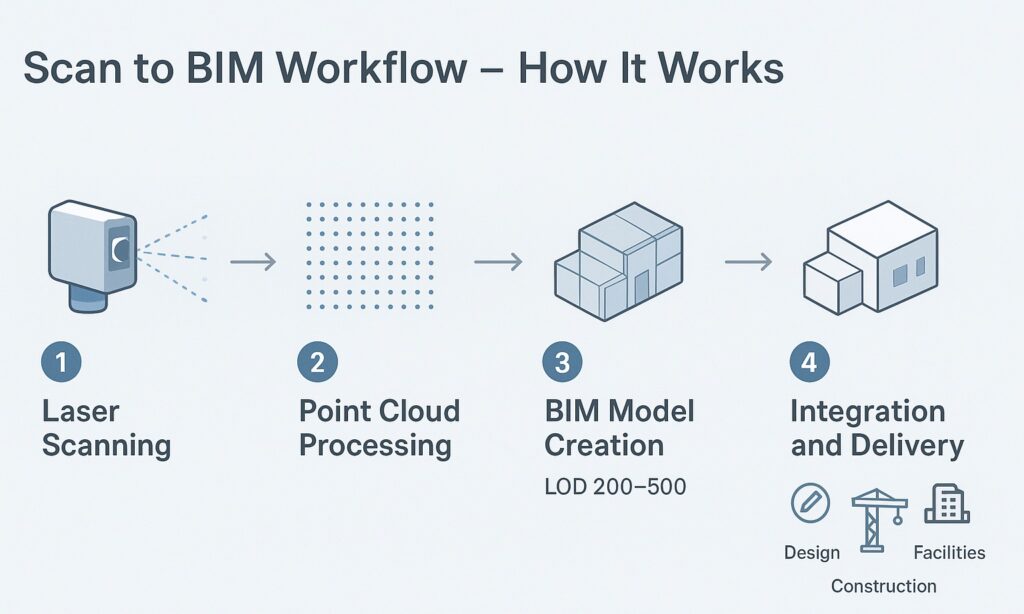
Scan to BIM Workflow – How It Works
Step 1: Laser Scanning
3D scanners capture millions of points per second.
Step 2: Point Cloud Processing
Specialized software organizes, cleans, and aligns the raw scan data.
Step 3: BIM Model Creation
Experts convert point clouds into accurate BIM models (LOD 200–500).
Step 4: Integration and Delivery
The final model integrates into workflows for design, construction, or facilities management.
This workflow is standardized across regions but adapted for regulatory, climatic, and urban contexts in places like New York.
How Scan to BIM Supports Facility Managers
For facility managers, Scan to BIM goes beyond construction. It enables:
-
Asset tagging and management
-
Preventive maintenance planning
-
Energy optimization
-
Space utilization analysis
The real power comes when paired with IoT to form digital twins—helping buildings perform smarter across the USA, UK, UAE, India, and New York.
Competitive Advantage for Contractors and Owners
While the benefits are compelling, challenges include:
-
Large data handling and storage needs
-
Skilled labor shortages in emerging markets like India
-
Integration hurdles with legacy systems
-
High initial investment in scanning equipment
However, partnerships with specialized BIM service providers make adoption feasible even for mid-sized contractors and developers in New York.
Future of Scan to BIM – AI and Beyond
Emerging trends point toward AI-driven automation in Scan to BIM. Algorithms can now identify elements within point clouds and auto-generate models, reducing human intervention.
With AI, AR/VR visualization, and IoT, the integration of Scan to BIM with digital twins will redefine facility management globally—including smarter construction delivery in New York.
FAQs
Q1: What is Scan to BIM used for?
Scan to BIM is used to convert laser-scanned data of buildings into intelligent BIM models for design, construction, and facility management.
Q2: How accurate is Scan to BIM?
Laser scanning can achieve millimeter-level accuracy, making Scan to BIM far more precise than traditional surveys.
Q3: Why is Scan to BIM important for digital twins?
Digital twins rely on accurate as-built models. Scan to BIM provides the baseline for integrating IoT sensors and real-time building data.
Q4: Which industries benefit from Scan to BIM?
Healthcare, airports, infrastructure, real estate, and heritage restoration projects across the USA, UK, UAE, and India benefit significantly.
Q5: Is Scan to BIM widely adopted in New York?
Yes. Given the density and complexity of construction in urban areas, Scan to BIM is increasingly adopted for smarter, more efficient project delivery in New York.