Mobile and Wearable Scanning: Mobile and Wearable Scanning Devices for Interior Capture
Construction and architecture firms across Texas increasingly adopt mobile and wearable scanning to enhance their Scan‑to‑BIM workflows. Using LiDAR and SLAM-based devices like handheld and backpack scanners, they accelerate interior capture and optimize on-site data collection. This blog explores how teams throughout the Lone Star State leverage these technologies to deliver real-time feedback, boost accuracy, and win more clients through faster delivery and better results.
Mobile and Wearable Scanning Technology Overview
Mobile and wearable scanning technologies are enabling teams in Texas building projects to capture interior data with unprecedented speed and accuracy. Project teams are integrating LiDAR and SLAM technologies into compact handheld or wearable devices, allowing them to perform scanning operations on the move without relying on static setups.
How Mobile and Wearable Scanning Devices Work
-
Mobile and wearable scanning systems utilize SLAM (Simultaneous Localization and Mapping) algorithms to localize the device and capture spatial data, enabling live mapping of indoor environments.
-
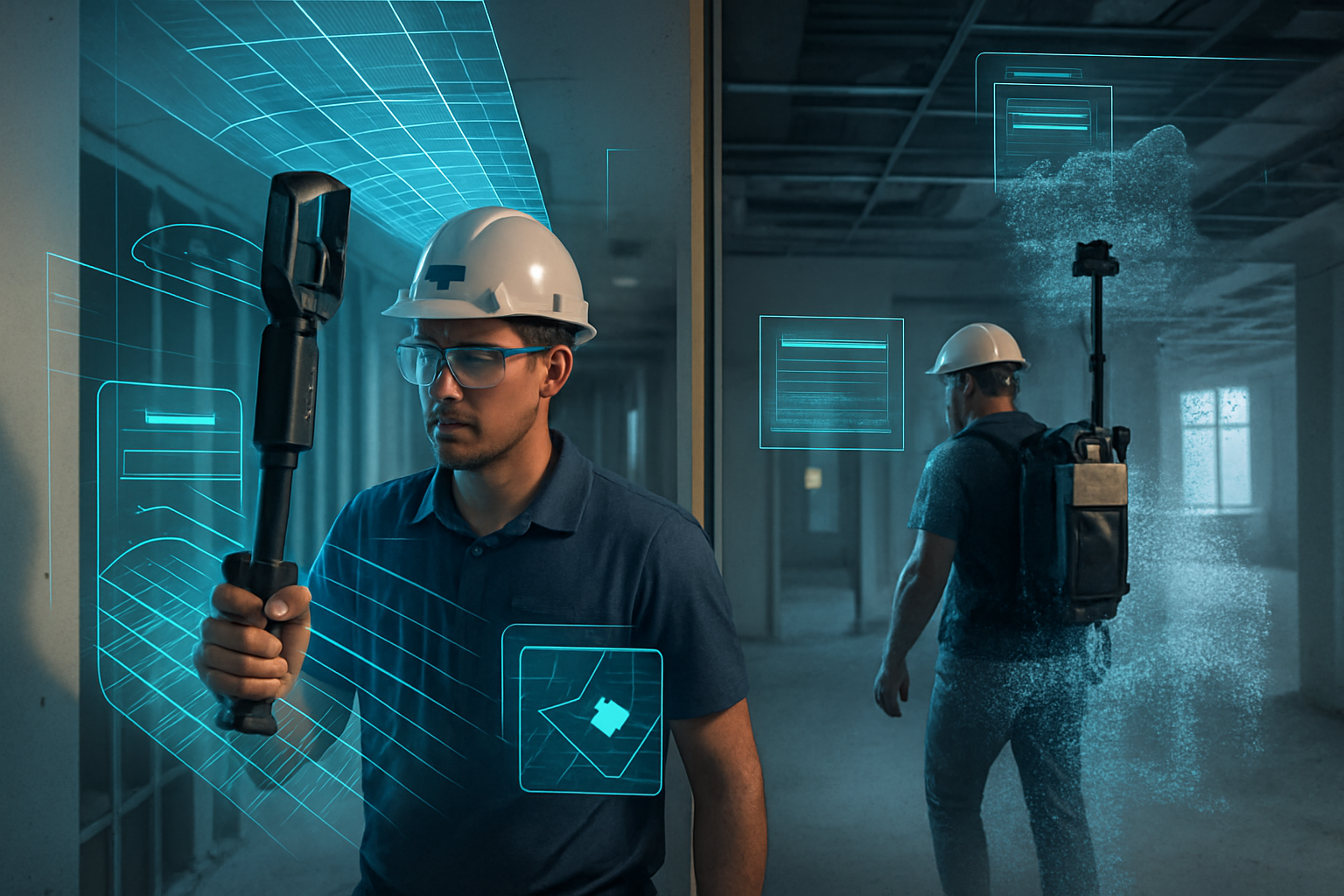
Project teams embed LiDAR sensors within wearable units like backpacks, generating dense point clouds as users move through indoor spaces.
-
Teams use handheld scanners for flexibility and deploy backpack scanners to cover larger areas quickly—industry leaders recognize the integration of both as key to adopting mobile and wearable scanning.
Benefits of Mobile and Wearable Scanning for Scan‑to‑BIM
By deploying mobile and wearable scanning, Texas firms gather interior data faster, reduce downtime, and enhance productivity across projects. Key advantages include:
-
-
Rapid data collection: Mobile devices offer real-time scanning feedback, allowing teams to validate collected data immediately and perform quick re-scans if needed.
-
Enhanced efficiency: Teams streamline on-site scanning workflows, minimizing disruptions and accelerating the transition to BIM modeling.
-
Improved client satisfaction: Firms deliver visual and accurate point clouds sooner, building trust and boosting client retention.
-
Cost mitigation: Teams reduce labor and equipment costs by using faster scanning protocols enabled by mobile and wearable solutions.
-
Use Cases in Texas: Mobile and Wearable Scanning in Action
In many Texan cities—such as Houston, Dallas, Austin, and San Antonio—teams are executing projects that showcase the power of mobile and wearable scanning methods.
Commercial Office Renovations in Austin
-
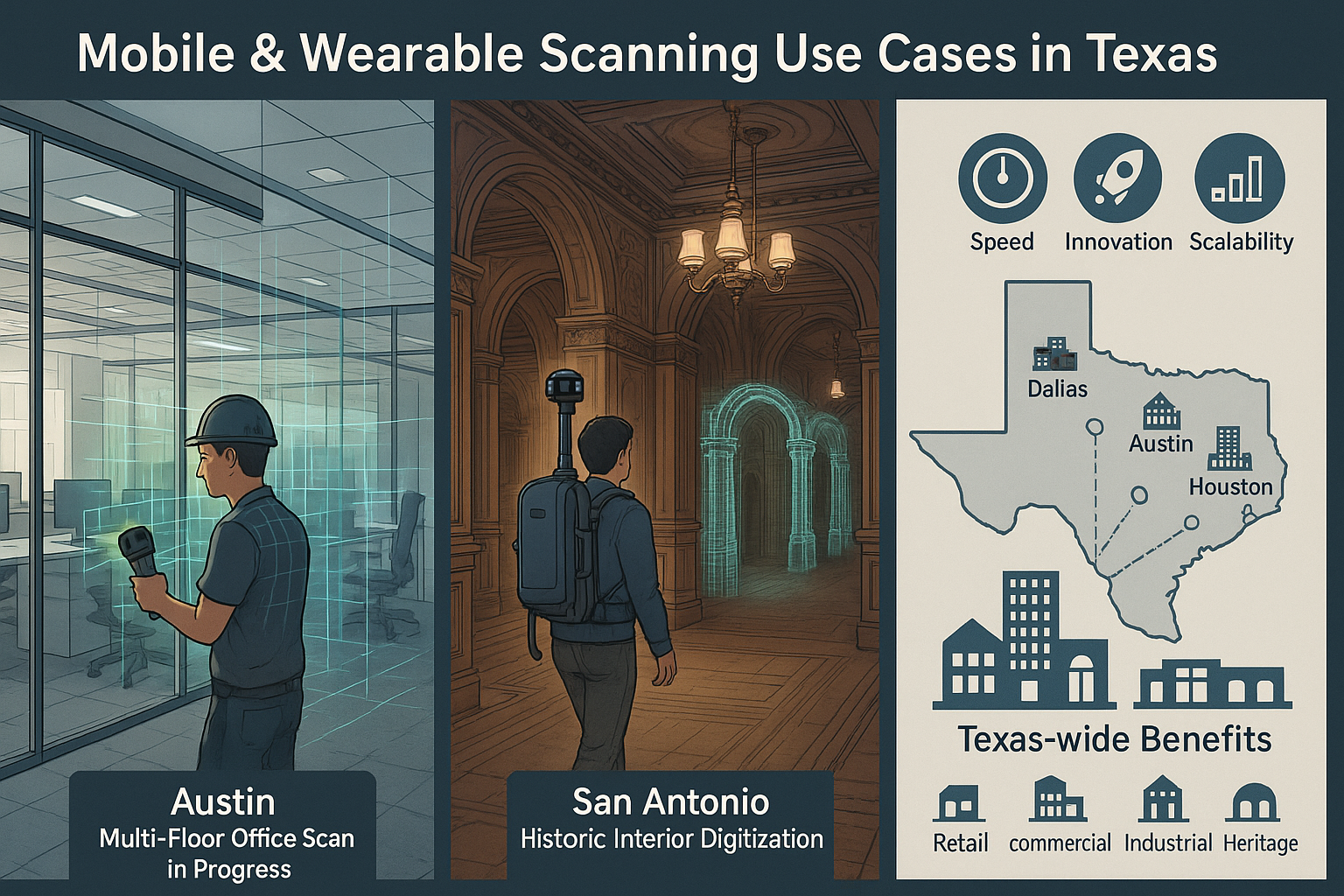
A firm based in Austin uses handheld SLAM-equipped scanners to rapidly capture the interiors of multi-floor office spaces. They digitize office layouts in hours instead of days, enabling design teams to work simultaneously with scanning operations.
Historic Building Documentation in San Antonio
-
Project teams use backpack-mounted LiDAR scanners during off-hours to digitally preserve historic interiors. They scan delicate features without causing disruptions, producing high-fidelity models that support accurate restoration work.
Why Texas Firms Should Embrace Mobile and Wearable Scanning
By integrating mobile and wearable scanning into their services, Texas architecture and construction companies position themselves to outpace competitors:
-
Faster time-to-delivery: Teams scan faster, produce BIM models quicker, and deliver results to clients with greater speed.
-
Differentiation: Offering modern, efficient scanning sets firms apart in a competitive market.
-
Scalability: Teams handle projects of any interior size—from small retail spaces to large industrial complexes—with agility using mobile and wearable scanning workflows.
Tips for Implementing Mobile and Wearable Scanning in Texas
To successfully adopt mobile and wearable scanning, Texas firms follow these recommendations:
-
Pilot small projects: Select a manageable interior area (like a retail or office zone) to trial SLAM and LiDAR hardware.
-
Train operators locally: Companies provide training in urban centers like Dallas or Houston, where technicians learn proper scanning paths, speed control, and data validation.
-
Integrate with BIM software: Teams import scanned point clouds into Revit, ArchiCAD, or similar tools and optimize post-processing workflows for mobile and wearable scanning output.
-
Highlight the advantage to clients: Marketing materials should emphasize how mobile and wearable scanning delivers faster, more accurate models, translating to cost and time savings for clients across Texas.
Future Trends: Where Mobile and Wearable Scanning is Heading
Looking ahead, mobile and wearable scanning is expected to evolve with:
-
Improved sensor miniaturization: Developers are making scanners lighter and more user-friendly, increasing mobility.
-
Enhanced SLAM capabilities: Engineers are refining real-time SLAM for greater precision in complex interiors, even under low-light or cluttered conditions.
-
Cloud‑based workflows: Teams are instantly uploading on-site scans to cloud platforms, enabling remote collaboration—especially valuable for multi-location Texas firms.
- Integration with AR and VR: Professionals are using augmented and virtual reality tools to visualize scanned interiors, giving clients immersive previews of remodels or as-built conditions.
Summary
In summary, mobile and wearable scanning is being revolutionized in Texas Scan‑to‑BIM workflows. LiDAR and SLAM-powered handheld and backpack scanners are accelerating interior capture, delivering real-time feedback, boosting efficiency, and setting firms up for project success—and client wins. By adopting this emerging trend, Texas firms are being empowered to deliver faster, better, and with modern distinction.